Everything
starts with Water
Embark on this adventure of discovery about water and the impacts that our ecosystem has been suffering.

Precipitation
As clouds become denser and heavier, water droplets come together and fall back to Earth in the form of rain, snow, or hail. This is the stage of precipitation, which replenishes water in terrestrial reservoirs.


Evaporation
It all starts with the energy of the sun heating the Earth`s surface. This energy is absorbed by water in oceans, lakes, and rivers, leading to the evaporation of water molecules, which turn into water vapor in the atmosphere.
Condensation
Water vapor rises into the atmosphere, where the temperature is lower. This leads to condensation, in which the vapor clusters together to form small water droplets, creating clouds. This process is crucial for cloud formation.

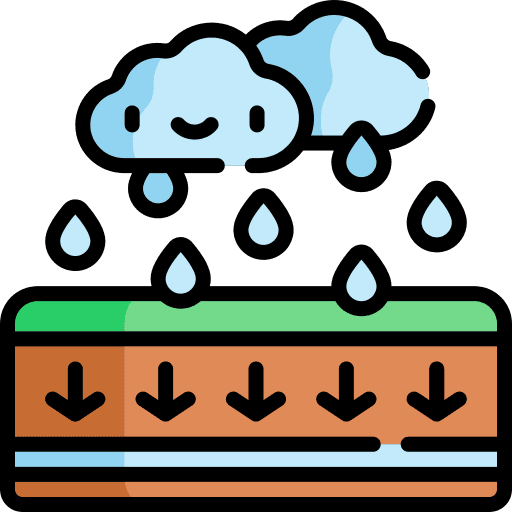
Infiltration
Precipitation water infiltrates the soil, where it is absorbed by plants or flows into groundwater. Part of it also flows into rivers and streams, feeding aquatic ecosystems.
(Evapo)
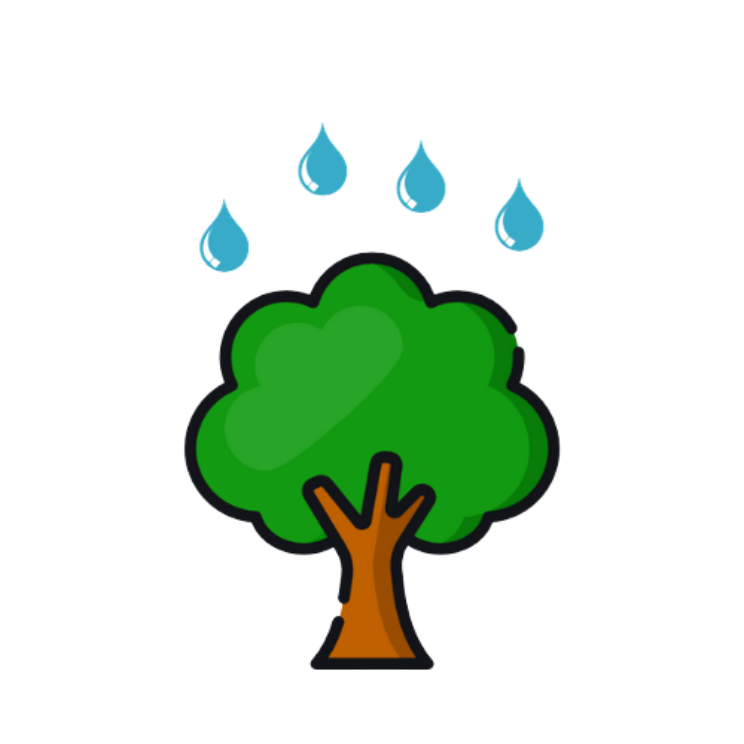
Transpiration
Plants absorb water from the soil and release it into the atmosphere through transpiration. Evapotranspiration refers to the sum of soil surface evaporation and plant transpiration. This process is vital for the continuous circulation of water in the biosphere.

Runoff to streams
Water that is not absorbed by the soil or plants flows into rivers and streams, forming river systems that provide freshwater for various purposes, from public supply to agriculture.
Runoff to ocean
Finally, water flows back to the oceans, where the cycle begins again with evaporation.

Climate change is disrupting the water cycle in worrying ways, increasing evaporation and resulting in more intense and extreme precipitation events.
This leads to prolonged droughts in some areas and devastating floods in others.
Glacier melting affects the supply of freshwater, while rising sea levels cause saline intrusion in coastal aquifers.
Sustainable water management and reducing greenhouse gas emissions are crucial to preserving this delicate and essential balance for life on Earth.
The increase of carbon dioxide (CO2) in the atmosphere
Due to human activities, such as burning fossil fuels, this causes significant impacts on water and the water cycle. Below are some ways in which the increase in CO2 affects water.
Ocean Acidification
Excess CO2 in the atmosphere is absorbed by the oceans, where it reacts with water to form carbonic acid. This leads to ocean acidification, making the waters more acidic. This can harm marine organisms, such as corals and mollusks, that have shells or skeletons made of calcium carbonate, as it makes it harder for them to build and maintain these structures.
Water Heating
The increase of CO2 in the atmosphere contributes to global warming, which also heats up ocean waters and affects marine ecosystems, including coral reefs and marine life.
Changes in the Hydrological Cycle
The increase of CO2 in the atmosphere is associated with changes in precipitation patterns and the hydrological cycle. This can result in more severe droughts in some regions and intense rainfall in others.
Melting of Glaciers
The increase in temperatures due to the increase in CO2 is contributing to the melting of glaciers and polar ice caps, which in turn is raising sea levels and affecting coastal ecosystems.
Therefore, the increase of carbon dioxide in the atmosphere plays a fundamental role in climate change and has significant impacts on water and aquatic ecosystems worldwide.
So far we have learned a lot about the cycle of water.

Scientists also say that practicing is part of the learning process, so we have a quick test.
During this test, you have to choose the correct option for each question in order to keep your water resource.
And as you may know, water is crucial for human being, so you don't want to lose it, right?